3 minute read
The Federal Housing Administration this week began its latest save-the-economy campaign with the new Short Refinancing program. What is interesting to note is that this campaign lived to breathe after multitudinous voices in the mortgage finance industry detailed what a bad idea it is. For the weeks running up to the program, just about every single financial firm with a research department sent out some note or another claiming how borrowers won’t qualify (Amherst), the GSEs don’t have the authority (KBW) and/or there is no way to prioritize what loans qualify (JPM). In my column last week, I also highlighted how ineffectual current mortgage relief programs are proving. I’ve always been critical of the tactic of fixing mortgage finance via government intervention – with the aim to repair the economy – because it is a backwards approach. Bad mortgages provided the spark to the financial crisis, but that isn’t the fire that need be extinguished first. In procyclical environments, the best place to start is at the end. In this case the lack of expendable cash to American households. Credit card companies are absolutely awash with cash. So much so that the securitization of credit card receivables stands at around one-fifth of peak issuance (from $25 billion to $5 billion according to Thomson Reuters). This is simply because credit card companies do not require funding vehicles. Indeed Americans are trying to deleverage. But it doesn’t seem to be really working in terms of an immediate added value to the household bottom line as bank deposits are at the lowest point since 1992. So while Americans may be marginally paying down credit debt, disposable income is dissipating as well. In short we’re going broke, but at least the credit card bills are current. The mentality of risking default on a secured loan worth hundreds of thousands of dollars versus staying current with unsecured debt in the low thousands underlines just how schizophrenic the mentality of debt holders has become. Consider this comment from a reader who is so angry at her mortgage servicer that she thinks her mortgage is a rip-off and the bank is out to skin her alive: “I am sure B. of A. would prefer to keep my mortgage as it is–a payment of $1293/mo. @ 5.95% for approx. 27 more years. That would be great for us both, but I’m not sure I can do that.” Complaints over a minus-six rate 30 year fixed? No balloon repays, resets? The terms exactly as laid out three years ago? In the most recent Bank of International Settlements (the guys behind Basel reform) quarterly review, analysts Christian Upper and Garry Tang say that modern world debt is decreasing, but so are financial assets (read: investments). “Household indebtedness fell in Ireland, Spain and the United Kingdom,” they wrote. “That said, households in all four countries remain substantially more indebted than at the outset of the housing boom:”  The rate of deleveraging, amid dwindling investments, isn’t increasing to match the growing rate of debt. This is likely due primarily to the collapse in the value of the average American’s main investment: the home. Therefore, not having the ability to up the value of the home, the government should consider ways to help households reduce debt. And considering the unsecured status of credit card debt, that seems a better place to start. Besides, it feels like high time for those companies to shoulder some of this strategic default burden. Jacob Gaffney is the editor of HousingWire. Write to him.

Jacob Gaffney is formerly Editor-in-Chief of HousingWire and HousingWire.com. He previously covered securitization for Reuters and Source Media in London before returning to the United States in 2009. While in Europe for nearly a decade, he covered bank loans and the high yield market, in addition to commercial paper, student loan, auto and credit card space(s).see full bio
Most Popular Articles
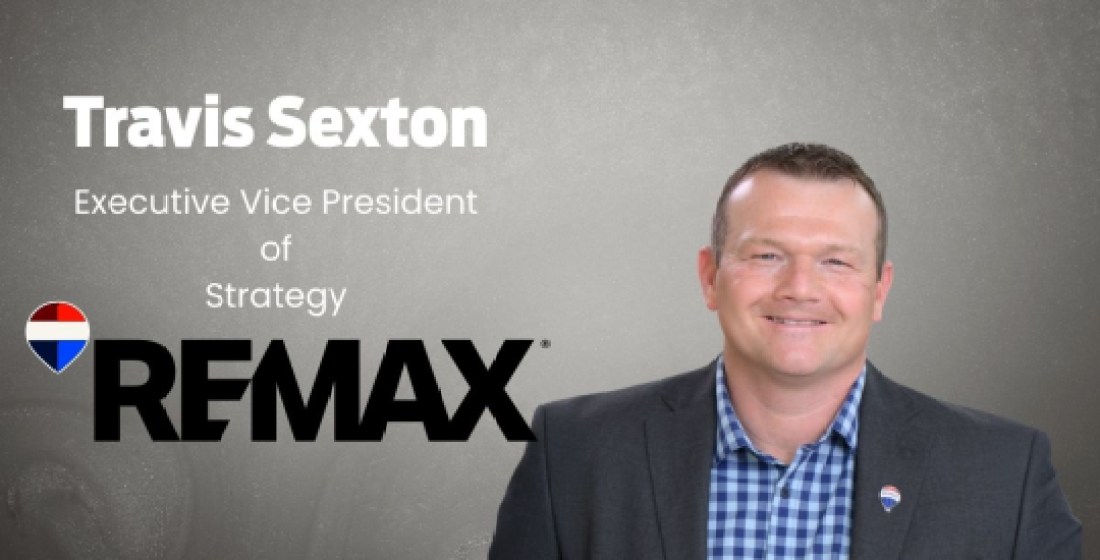
RE/MAX accelerates real estate innovation with AI and technology
RE/MAX is accelerating the integration of AI and cutting-edge technology to transform how agents engage with clients, generate leads, and deliver results. Initiatives like Max AI, MaxRefer, MaxEngage, and HomeView leverage real-time data, personalized marketing, and AI-driven tools to streamline the homeownership experience and empower its agents. Leading this innovation is Travis Saxton, EVP of Strategy at RE/MAX, who has spearheaded the rollout of these technologies, including AI-powered training through Sky AI and SkyStudio, redefining the future of real estate by combining human connection with next-generation tools.
Nov 17, 2025 3:44 am
Latest Articles

From resilience to antifragility: Rethinking cybersecurity for real estate and mortgage professionals
In information security, we’ve long spoken about resilience. The goal has been to withstand an attack, recover quickly, and return to business as usual. But in today’s environment—where attackers adapt and evolve daily—resilience is no longer enough. We must go further. We must embrace antifragility.
-
From local to global: RE/MAX’s Chris Lim on the next era of real estate relationships
-
Stop marketing like it’s 2008: You’re invisible
-
RE/MAX accelerates real estate innovation with AI and technology
-
Retirement plans for small-business owners have visible generational gaps
-
VA loans rise as housing market shifts toward buyers
Jacob Gaffney is formerly Editor-in-Chief of HousingWire and HousingWire.com. He previously covered securitization for Reuters and Source Media in London before returning to the United States in 2009. While in Europe for nearly a decade, he covered bank loans and the high yield market, in addition to commercial paper, student loan, auto and credit card space(s).see full bio