

 2 minute read
In the latest blow to the global capital and commercial markets, Moody’s Investors Service today downgraded all six Dubai government-related issuers. At this point Dubai’s woes are well documented, even though financials anticipated the nonpayment of Dubai World, or at least related entities, for quite some time. Nonetheless, experts interviewed for this piece by HousingWire indicate that troubles in the Emirate are expanding to the shores of Western banking. “The recent events in Dubai mean that the cost of capital in commercial real estate just went up, not just the cost of commercial restructuring,” states James Frischling, CEO NewOak Capital on Dubai developments. “This shows a kink in the armor for many holders of commercial real estate who have adopted the “extend” strategy as a way of managing through the crisis. He adds: “In my opinion, while CMBS had witnessed significant spread tightening, the events in Dubai will put a spotlight on the risks in that sector and will cool that rally down a bit.” The Dubai government, Dubai World’s principal owner, asked creditors two weeks ago to delay repayments for at least six months while it restructures more than $60bn in debt, including billions from its real estate firm Nakheel. In the statement on the decision, Moody’s analysts say: “This rating action follows recent comments and statements from government officials, which cause us to believe that no meaningful government support should be assumed for any entity that is not directly part of or formally guaranteed by the government.” Dubai’s future, by some accounts, seems wrapped up in a bailout from the United Arab Emirates Central Bank in nearby, oil-rich Abu Dhabi, which is probably now re-thinking its own massive cityscape project Abu Dhabi 2030. The Moody’s development is also particulary interesting considering its report less than six months ago on the proposed merger of Emaar Properties and Dubai Holding Commercial Operations Group (DHCOG) into an all-powerful property monolith in the Emirate. In that article, Martin Kohlhase, an associate analyst in Moody’s Corporate Finance Group based in Dubai, said: “Larger government ownership in Emaar may not be sufficient to mitigate the detrimental impact that the merger would have on the company’s fundamental creditworthiness. Furthermore, ongoing market weakness and the prospects of weaker cash flow over the near to medium term will impact the combined group going forward.” Today, the credit rating agency added “the review of DHCOG and Emaar reflects prospects for a prolonged real estate market slump, as well as the evolving nature of both entities as a result of their pending merger.” In a conversation with Khalid Howladar, vice president Middle Eastern & Islamic Finance at Moody’s, around one year ago, he mentioned that the financial structure of Dubai had yet to be tested. That certainly isn’t the case any longer. Write to Jacob Gaffney.

Jacob Gaffney is formerly Editor-in-Chief of HousingWire and HousingWire.com. He previously covered securitization for Reuters and Source Media in London before returning to the United States in 2009. While in Europe for nearly a decade, he covered bank loans and the high yield market, in addition to commercial paper, student loan, auto and credit card space(s).see full bio
Most Popular Articles
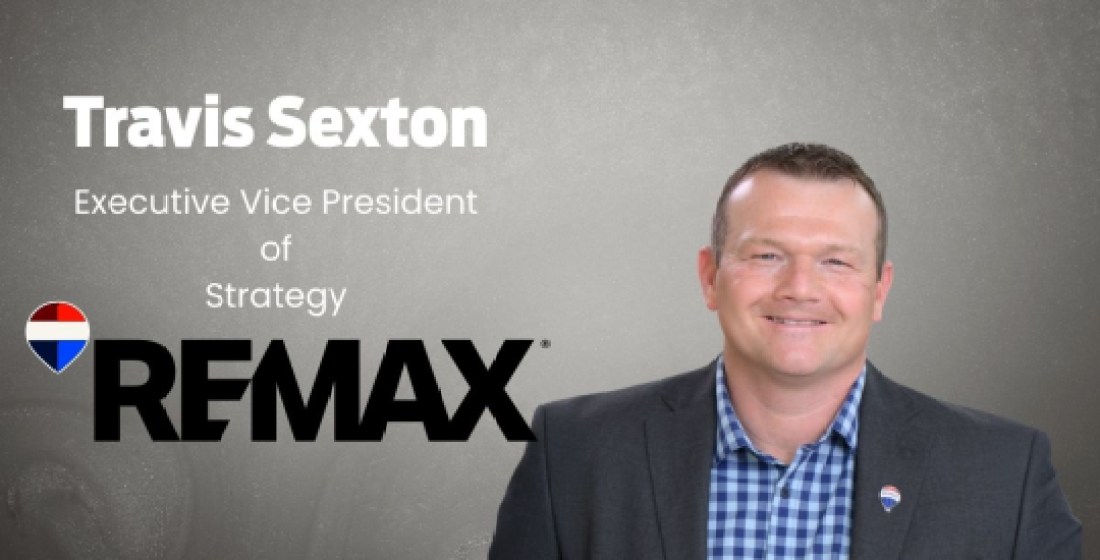
RE/MAX accelerates real estate innovation with AI and technology
RE/MAX is accelerating the integration of AI and cutting-edge technology to transform how agents engage with clients, generate leads, and deliver results. Initiatives like Max AI, MaxRefer, MaxEngage, and HomeView leverage real-time data, personalized marketing, and AI-driven tools to streamline the homeownership experience and empower its agents. Leading this innovation is Travis Saxton, EVP of Strategy at RE/MAX, who has spearheaded the rollout of these technologies, including AI-powered training through Sky AI and SkyStudio, redefining the future of real estate by combining human connection with next-generation tools.
Nov 17, 2025 3:44 am
Latest Articles

From resilience to antifragility: Rethinking cybersecurity for real estate and mortgage professionals
In information security, we’ve long spoken about resilience. The goal has been to withstand an attack, recover quickly, and return to business as usual. But in today’s environment—where attackers adapt and evolve daily—resilience is no longer enough. We must go further. We must embrace antifragility.
-
From local to global: RE/MAX’s Chris Lim on the next era of real estate relationships
-
Stop marketing like it’s 2008: You’re invisible
-
RE/MAX accelerates real estate innovation with AI and technology
-
Retirement plans for small-business owners have visible generational gaps
-
VA loans rise as housing market shifts toward buyers
Jacob Gaffney is formerly Editor-in-Chief of HousingWire and HousingWire.com. He previously covered securitization for Reuters and Source Media in London before returning to the United States in 2009. While in Europe for nearly a decade, he covered bank loans and the high yield market, in addition to commercial paper, student loan, auto and credit card space(s).see full bio


