3 minute read
Scott Stern is co-founder and CEO of Lenders One Mortgage Cooperative, a national alliance of more than 150 independent mortgage bankers. It leverages its aggregate buying power and preferred investor relationships to negotiate lending terms and provide business services at reduced costs for its members. Lenders One recently announced its role as a founding member (along with BuckleySandler and The Glaser Group) of a new mortgage industry lobbying group, CML America, that will focus on protecting the interests of independent mortgage bankers. For this installment of In This Corner, Scott discusses how Lenders One is helping mortgage bankers move past the foreclosure crisis and other issues facing the industry. HW: How has Lenders One Mortgage Cooperative helped mortgage bankers through the current foreclosure crisis? Scott: Lenders One helps mortgage bankers increase revenues, decrease expenses and expand market share. Each of these initiatives is critical to our members as they strive to increase profitability. We also encourage our members to be well-trained and to provide honest and transparent services to mortgage consumers. HW: Lenders One and others recently formed a new lobbying group for mortgage bankers. What is top issue the group hopes to tackle? Scott: The top issue for Community Mortgage Lenders of America, or CML America, is to ensure a level playing field between all mortgage industry participants. To illustrate, we are already working on repealing certain components of the SAFE Act, which unfairly penalizes non-depository mortgage bankers by requiring pre-licensing continuing education, ongoing continuing education and licensing in multiple states with little state reciprocation. The SAFE Act is a monetary tax, a resource tax and a recruiting tax on non-depository mortgage bankers versus other mortgage companies. HW: What is the key to rejuvenating warehouse lines to lenders? Scott: We hope that the private sector solves the warehouse-lending crisis, but we have seen no new private sector entrants in a long time. Unfortunately, there are several reasons why private sector companies are avoiding warehouse lending – ranging from reputational risk, regulator issues, stock price concerns and more. Until private sector companies enter the space again, the public sector (Congress, regulators or the GSEs) will have to solve the problem before it dramatically impacts the financial markets. HW: The US Congress is considering an extension to the first-time homebuyer tax credit. Would the extension be beneficial to the market or just an artificial prop? Scott: This would be very beneficial to the housing market. Data suggests that a new homebuyer spends $8,000 on household related products and services upon buying an existing home, and $12,000 on household related products and services upon purchasing a new construction home. That means that the first-time homebuyer tax credit provides societal benefit on many levels: Home prices increase as homes are purchased, property taxes are generated, goods and services are purchased and sales tax revenue is created. Suffice it to say that we believe that the first-time homebuyer tax credit should be extended. HW: Have you read the new bill introduced that would raise the minimum down payment on an FHA loan to 5%? Scott: I think it is a bad idea because raising the down payment on loans will not make those loans any safer. All it will do is make it harder for people to purchase homes, which forestalls a recovery in the housing industry.

Jon Prior was a reporter with HousingWire through late 2012.see full bio
Most Popular Articles
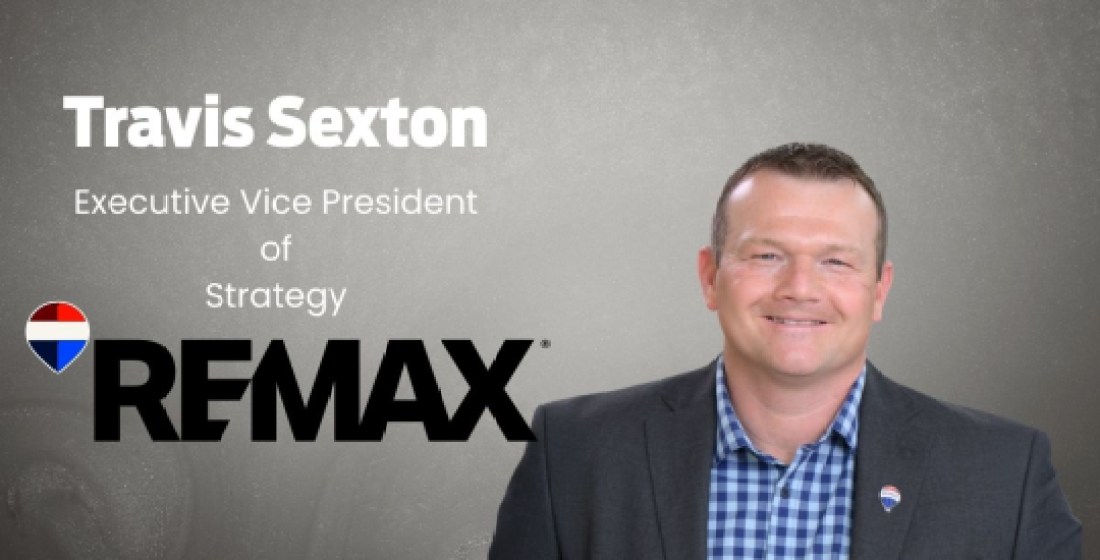
RE/MAX accelerates real estate innovation with AI and technology
RE/MAX is accelerating the integration of AI and cutting-edge technology to transform how agents engage with clients, generate leads, and deliver results. Initiatives like Max AI, MaxRefer, MaxEngage, and HomeView leverage real-time data, personalized marketing, and AI-driven tools to streamline the homeownership experience and empower its agents. Leading this innovation is Travis Saxton, EVP of Strategy at RE/MAX, who has spearheaded the rollout of these technologies, including AI-powered training through Sky AI and SkyStudio, redefining the future of real estate by combining human connection with next-generation tools.
Nov 17, 2025 3:44 am
Latest Articles

From resilience to antifragility: Rethinking cybersecurity for real estate and mortgage professionals
In information security, we’ve long spoken about resilience. The goal has been to withstand an attack, recover quickly, and return to business as usual. But in today’s environment—where attackers adapt and evolve daily—resilience is no longer enough. We must go further. We must embrace antifragility.
-
From local to global: RE/MAX’s Chris Lim on the next era of real estate relationships
-
Stop marketing like it’s 2008: You’re invisible
-
RE/MAX accelerates real estate innovation with AI and technology
-
Retirement plans for small-business owners have visible generational gaps
-
VA loans rise as housing market shifts toward buyers
Jon Prior was a reporter with HousingWire through late 2012.see full bio