2 minute read
In wide-ranging remarks delivered today to the Senate Committee on Banking, Housing and Urban Affairs, Federal Deposit Insurance Corp. chairman Sheila Bair said that the banking industry faces some strong challenges during 2008 as problems in the housing and credit markets are likely to strain banking operations nationwide. “We expect 2008 to be a challenging year compared to the past few years,” she said. “Experience has demonstrated that credit losses stemming from broad economic shocks can take time to fully manifest themselves in financial institutions.” In particular — and perhaps somewhat surprisingly — Bair singled out commercial real estate as problematic, underscoring the regulator’s concerns that banks may lack sufficient risk management systems to manage an extended downturn in commercial property. “The FDIC is prepared to move promptly to handle any bank failures that may occur,” she said. Recent reports have said that the FDIC is ramping up staff in anticipation of the largest spate of bank failures since the S&L crisis of the late 1980s. Bair also said that the downturn in the credit markets — especially in mortgages — will likely benefit community banks. “By returning to fundamentals, banks, including community banks, should have an opportunity to recapture market share from non-bank competitors as some credit market funding shifts from the secondary market to banks and thrifts,” she said. Mortgage servicing, in the crosshairs Bair saved her strongest remarks, however, for servicing and loss mitigation efforts now underway in the residential mortgage market. In particular, she voiced concern about “a great reliance by servicers on repayment plans,” saying that such plans only serve to postpone a day of reckoning for most borrowers. “Repayment plans or brief deferrals of payments will not allow us to get past our current problems,” she asserted. “They are analogous to ‘kicking the can down the road.'” (I can’t help but wonder if Bair read earlier coverage on Housing Wire that was among the first to call attention to the issue.) The FDIC chairman also echoed earlier remarks by Fed chief Ben Bernanke, and suggest that lenders start writing down principal more aggressively. “In appropriate circumstances, lenders and servicers also should consider forgiving a portion of the principal balance owed,” she said. “Investors should be pushing for these types of modifications.” HW has earlier covered the complexity of the secondary market, and why investors aren’t uniformly pushing for the sort of modification activity Bair has been stumping for.

Paul Jackson is the former publisher and CEO at HousingWire.see full bio
Most Popular Articles
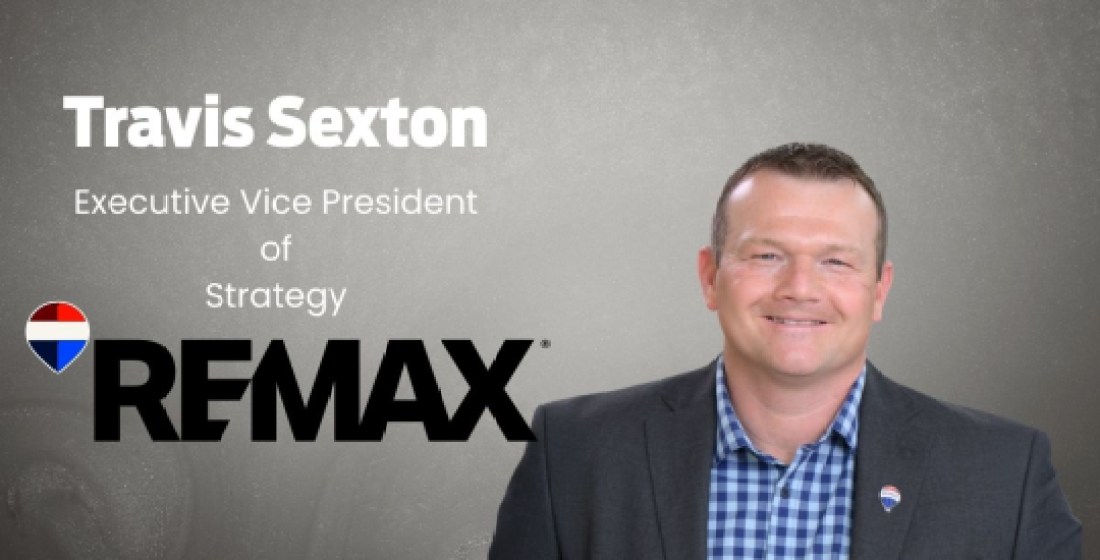
RE/MAX accelerates real estate innovation with AI and technology
RE/MAX is accelerating the integration of AI and cutting-edge technology to transform how agents engage with clients, generate leads, and deliver results. Initiatives like Max AI, MaxRefer, MaxEngage, and HomeView leverage real-time data, personalized marketing, and AI-driven tools to streamline the homeownership experience and empower its agents. Leading this innovation is Travis Saxton, EVP of Strategy at RE/MAX, who has spearheaded the rollout of these technologies, including AI-powered training through Sky AI and SkyStudio, redefining the future of real estate by combining human connection with next-generation tools.
Nov 17, 2025 3:44 am
Latest Articles

From resilience to antifragility: Rethinking cybersecurity for real estate and mortgage professionals
In information security, we’ve long spoken about resilience. The goal has been to withstand an attack, recover quickly, and return to business as usual. But in today’s environment—where attackers adapt and evolve daily—resilience is no longer enough. We must go further. We must embrace antifragility.
-
From local to global: RE/MAX’s Chris Lim on the next era of real estate relationships
-
Stop marketing like it’s 2008: You’re invisible
-
RE/MAX accelerates real estate innovation with AI and technology
-
Retirement plans for small-business owners have visible generational gaps
-
VA loans rise as housing market shifts toward buyers
Paul Jackson is the former publisher and CEO at HousingWire.see full bio