4 minute read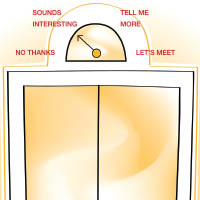
The “Elevator Pitch” is a short summary that quickly and simply defines a product, service or organization and its value proposition. Webster’s English Dictionary defines it as “a short description of a product or business idea, especially one given to a possible investor.”
The term was coined by Ilene Rosenzweig and Michael Caruso (while he was editor at Vanity Fair) and is derived from a scenario in which one finds themselves in an unexpected meeting with an important contact in an elevator. If the conversation inside the elevator in those few minutes is interesting and impactful, the conversation will either continue after the elevator ride, or end with an exchange of business cards or a scheduled meeting.
Most professionals have experiened this situation in some form. Sometimes our “elevator” is a restaurant, the waiting room of a doctor’s office, a cocktail party or a grocery store line. Wherever it is, it can be nervewracking for many to clearly summarize their services in about 90 seconds. And if you’re trying to explain the potential benefits of a reverse mortgage… well, that’s a tall order.
If you ask someone what it is they do for a living, and they say they are a financial planner, the conversation might just end there. Most people have a general understanding of what a financial planner does and what their work entails. But when it comes to reverse mortgages, few people have a true understanding about the loan. Even worse, many people have negative misconceptions about the product and its value. So how do we explain what we do in more detail without using terminology that may cause a person to lose interest? And further, how is that possible in just over a minute?
Let’s assume that the individual in the elevator is a complete stranger (as opposed to someone of significant importantance), and that you know nothing about them. What could you say that would capture their attention regardless of who they were or what their current situation was that would motivate them to want to engage in conversation?
There is no clear answer. Elevator pitches, once promotedly fervently as essential among business advisors in the 80s, have a tendency to pigeonhole you. It is a presentation rather than a conversation, and as a result, it prevents you from learning about your contact to help you establish a connection. In the reverse mortgage business, where the focus is on advising rather than selling, this is particularly important.
So, my advice is to focus on a response rather than a pitch. Craft a compelling way to describe your work when asked about it, and do so in a way that encourages discussion.
To do this, first create an opening hook. Consider something catchier than simply saying, “I sell reverse mortgages.” Something like, “I’m a solutions consultant” would be more attention-grabbing. This kind of opening hook might prompt your contact to ask what kind of solutions you offer, opening the door to further questions, which is your chance to engage the contact on a deeper level.
Then, offer a simple explanation as to how reverses can help solve this problem for a specific type of person. This is where you describe your target audience—who exactly stands to benefit from your services (i.e., a person over 62 who has equity in their homes, wishes to age in place and is not concerned with leaving their house to their heirs). Offer a practiced, concise definition of what a reverse mortgage truly is (stressing that the bank does not retain title of the home). Pause to answer any questions they may have. End your response with an emphasis on the value your solution can provide millions of house-rich, cash-poor Americans facing retirement.
While this may seem like a lot of information to pack into a short conversation, it can be done if your language is succinct and your key points are refined through practice. Remember to pause to give your contact the opportunity to ask questions or respond to your information. Listen carefully, as they may reveal things that allow you to alter your discussion to better suit their perspective.
When you master a clear and concise description of your work, you will be properly prepared to present your services to any passing contact, effectively building a business network everywhere you go.